How to Know When an Elderly Person Should Stop Driving
No single test or age tells you this. It comes down to a pattern of specific warning signs, not a feeling that something is off.
It's a pattern of specific incidents, not a feeling
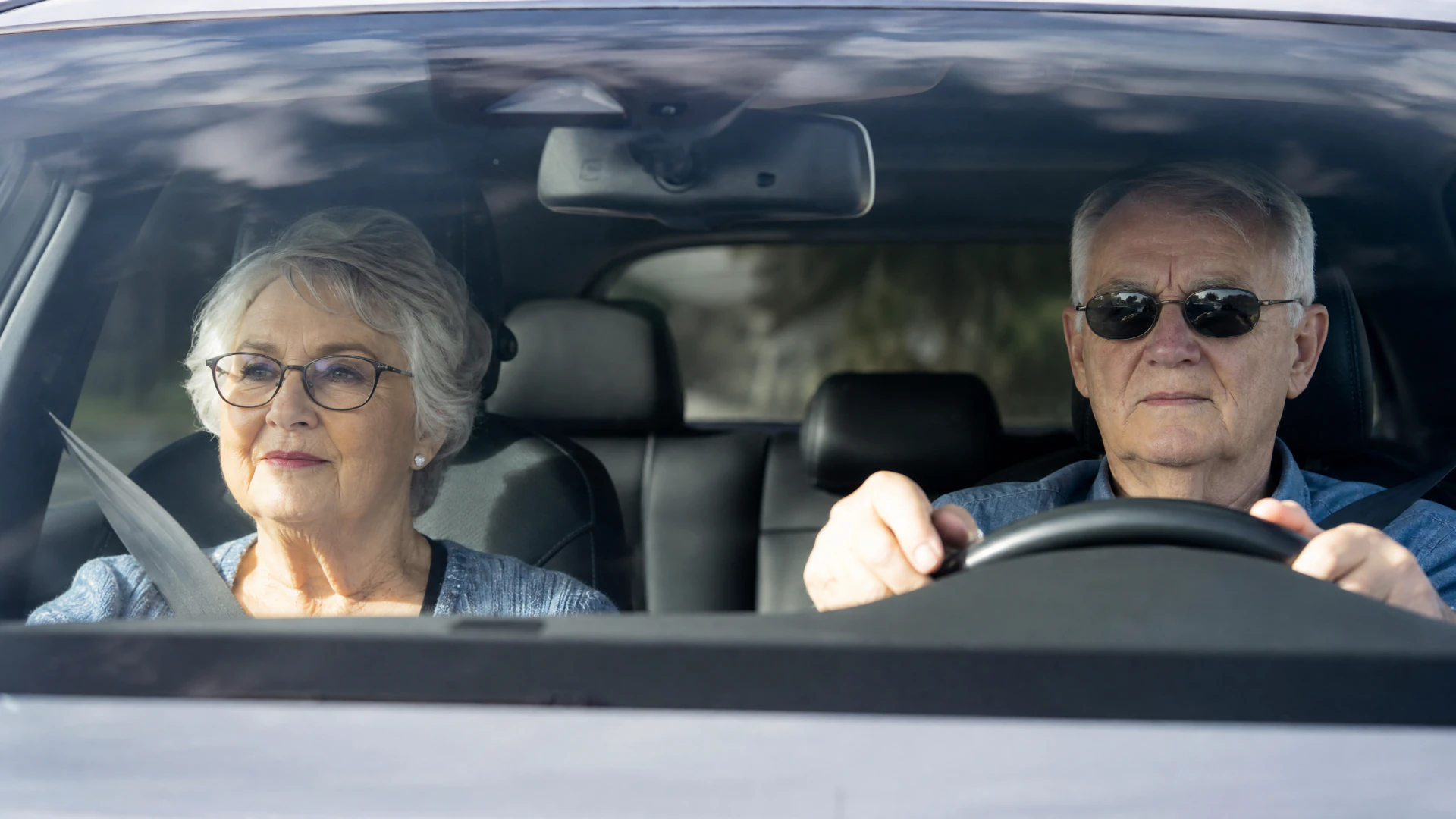
There's no age or test that answers this by itself. What answers it is a pattern: new dents or scrapes on the car, confusion on routes they've driven for years, trouble with traffic signs or lane changes, a near miss or a ticket, or family members who've started making excuses not to ride with them.
One incident alone usually isn't the answer. A near miss during a storm, or getting lost once in an unfamiliar area, happens to drivers of any age. What matters is whether these things are becoming more frequent, or whether they're happening in situations that used to be routine.
What actually changes the answer: vision, reaction time, and medication
Driving depends on seeing clearly, judging distance and speed, and reacting fast enough to avoid a problem. Each of these can decline gradually, which is why the person driving often doesn't notice it themselves. A vision test at license renewal catches some of this, but not all of it. Peripheral vision and night vision can fade without affecting a standard eye chart result.
Reaction time is harder to measure outside of an actual driving situation. If someone has started braking harder or later than they used to, or has trouble merging in traffic they used to merge into easily, that's worth paying attention to.
Medications matter too. Many common prescriptions, including some for blood pressure, sleep, and anxiety, can affect alertness or reaction time. A pharmacist or doctor can say whether a specific medication or combination affects driving. This is worth asking about directly rather than assuming it doesn't apply.
A doctor can also do a more thorough assessment of vision, cognition, and physical ability than a license renewal test does. Some states allow a doctor to report concerns directly to the licensing agency, and some require it. What a doctor is required to do with that information depends on the state, so it's worth asking the doctor directly what their role is.
What families get wrong: waiting for one big incident
Many families wait for a crash or a serious citation before having the conversation, treating smaller signs as one-off mistakes. By the time a serious incident happens, the driver has often already had several smaller ones that were explained away.
The other common mistake is relying only on the driver's own judgment. Most people believe they're still a safe driver even as their abilities decline, not because they're being dishonest, but because the decline is gradual and hard to notice from the inside. A second opinion, from a doctor, an occupational therapist who specializes in driving assessments, or a formal driving evaluation, gives a more objective answer than a family's impression or the driver's own sense of things.
Some states require more frequent testing or in-person renewal past a certain age, which can surface problems earlier. Others don't, which means the family or the driver themselves may be the only check in place for a long stretch of time. It's worth checking what the driver's state actually requires, since assuming a renewal test will catch a decline isn't reliable everywhere.
Questions people ask about this
What is a driving evaluation for seniors and who does it?
It's a formal assessment, usually done by an occupational therapist trained in driving rehabilitation, that tests vision, reaction time, decision making, and actual on-road performance. Many hospitals and rehab centers offer this. It gives a more objective answer than a family's impression, and some give a written report the family can use to have a harder conversation.
Can a doctor report an unsafe driver to the DMV?
In some states, yes, and in a few states it's required. In others, a doctor can only recommend that the patient be evaluated. What a doctor's role is depends on the state, so it's worth asking the doctor directly rather than assuming either way.
How do I talk to a parent about giving up driving?
Most people respond better to specific examples than to a general statement that they shouldn't drive anymore. Naming the actual incident, the near miss, the dent, the wrong turn, tends to land better than saying they seem less sharp. It also helps to have an alternative ready, like a ride plan, before the conversation, so it isn't just a loss with nothing offered in its place.
Does car insurance cost more for older drivers?
This depends on the insurer and the driver's own record, not just their age. Some insurers raise rates for older drivers, others don't change much, and a clean record can offset age in either direction. It's worth asking an insurer directly how they handle this rather than assuming.
What alternatives are there to driving for seniors who give it up?
Options include rideshare services, local senior transportation programs, community shuttles, and family or neighbor arrangements. What's available depends heavily on the area, rural areas often have far fewer options than cities. It's worth researching what exists locally before the conversation about stopping driving happens, so there's a real plan in place rather than just the loss of one.
If driving is still part of the picture, it's worth seeing how a record and situation like this one actually affects a quote.

Start by writing down what's actually been observed: specific incidents, dates if possible, and whether they're increasing. Bring that list to a doctor's appointment and ask directly whether a driving evaluation makes sense. Check what the driver's state requires for license renewal at their age, since some states have more frequent testing that can surface problems sooner. If a formal evaluation isn't available nearby, ask the doctor's office what they recommend instead. In the meantime, look into what ride options exist locally, so that if the answer turns out to be stopping, there's already a plan rather than a gap.